mercredi 22 septembre 2010

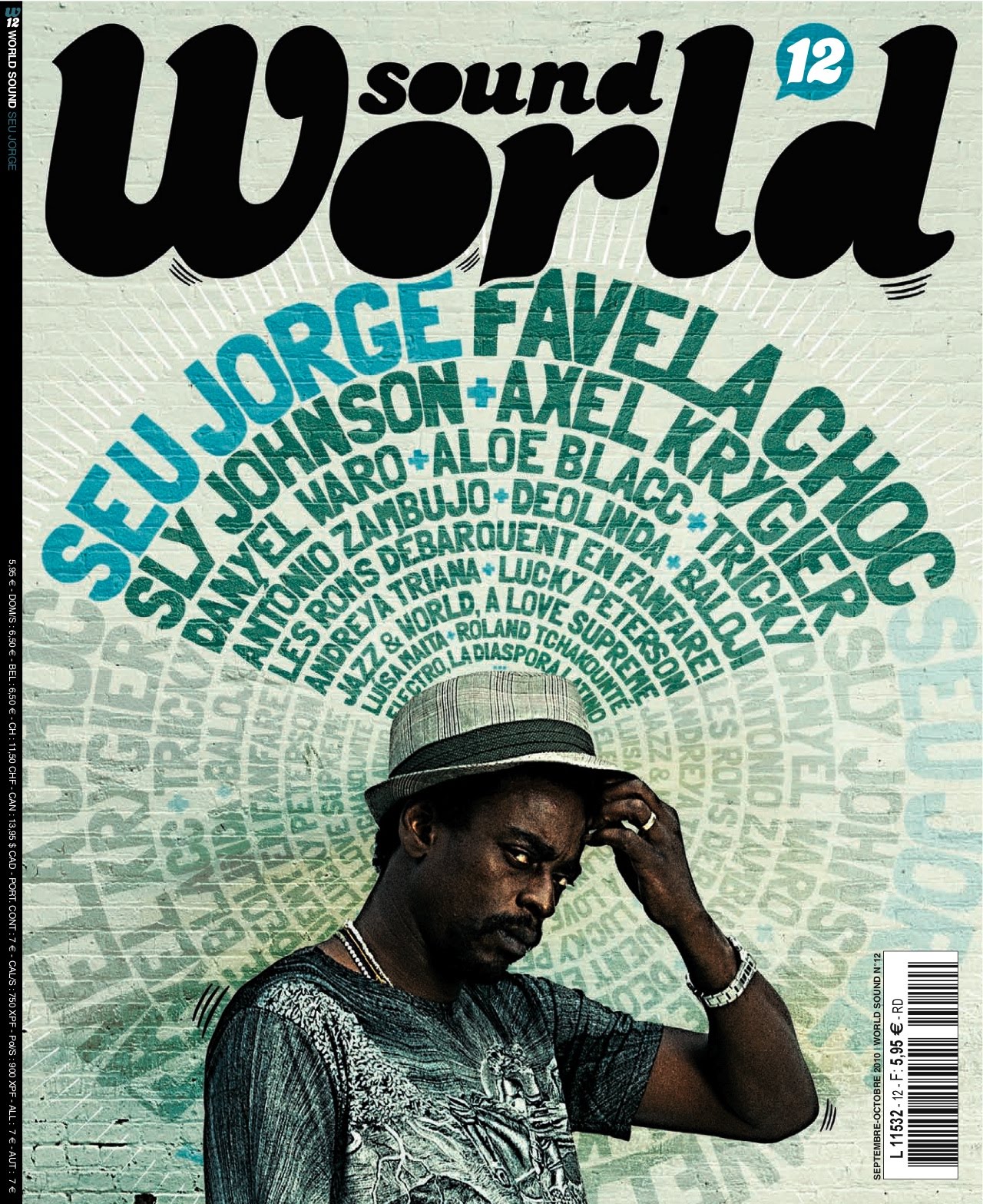
WORLD SOUND 12 -> Colombia representa en el cd sampler @


La Republica Calicuta est présente dans le cd sampler de ce numero de rentrée du magazine World Sound avec pas moins de trois titres séléctionnés : Meridian Brothers, Coffee Makers, Plastic Caramelo

La Republica Calicuta esta presente en el cd sampler de este numero de sept/octubre, con 3 de los 9 canciones selectionnadas : Meridian Brothers, Coffee Makers, Plastic Caramelo

Republica Calicuta represents Colombia on the cd sampler that goes with this sept oct issue of World Sound magazine, with 3 selected tracks out of 9: Meridian Brothers, Coffee Makers, Plastic Caramelo

Lisez les articles correspondants pour downloader ces titres
Lea los articulos que coresponden para bajar la musica
read the corresponding articles to download those tracks !

mercredi 8 septembre 2010

MERIDIAN BROTHERS (article en français)


Nourrie aux meilleures influences, entre poésie, humour, jazz, musique contemporaine et electro, la musique d'Eblis Alvarez détonne, dans un paysage musical colombien et latino plutot limité aux musiques traditionnelles, de danse et, dans les cas les plus limites et les plus novateurs, aux collages kitsch qui n'en reviennent pas moins au schéma d'une musique de danse, malgré leur originalité. Avec Alvarez, par ailleurs illustrateur talentueux, les amarres du "latinement correct" sont définitivement larguées. Et pourtant, on a affaire à une musique très colombienne. Un certain sens du rythme, lequel apparait déstructuré comme un vieux bus colectivo sans age à la conduite approximative et erratique, avançant par à coups, à la colombienne, pointe son nez. Nous l'avons interviewé à Bogota, et dans le WORLD SOUND#12 de septembre octobre, vous retrouverez un panorama de cette nouvelle creation. Vous trouverez les liens (sites et téléchargement) plus bas car blogspot bug comme un taré


Eblis, en écoutant Meridian Brothers, j’ai pensé a Laurie Anderson, que j’écoutais étant gosse, est ce que c’est moi qui l’associe avec l’enfance, ou ta musique a réellement un lien avec elle?

Beaucoup pensent à l’enfance en écoutant cette musique, effectivement. Je n’y avais pas vraiment pensé mais il y a beaucoup de matière qui, de par sa transparence ou son côté évident, peut évoquer des etats d’âme simples et joyeux, et ça on peut l’identifier à la musique infantile. Une musique ou un etat que ja qualifierais alors de gosse bourré, plutôt !

On dirait que tu travailles sur une ambiguité entre le merveilleux et le bizarre..

Des que j’ai demarré en 98, je voulais que la musique de MB soit bizarre et j;espere que cela sera encore le cas pendant longtemps. Le merveilleux je ne sais pas, je préfère dire “qui dénote”. Mais c’est le timbre qui a un grand rôle dans toute la structure de la musique qui est à la base de cela.

Il y a aussi cette recherche d’un mélange de textures entre instruments à vent et éléctronique...Comment en es tu arrivé à cela, a partir de ta vie a Bogotá, ton exil au Danemark...?

Il y a sept ans, j’étais au Conservatoire National du Danemark et dans mes compositions je recherchais des rythmes qui accélèrent et décélèrent tout en ne perdant pas la sensation de rythme et de pulsation. Quand j’ai trouvé une technique qui le permette je l’ai appliquée à tous mes projets, MB entre autres. Par contre je suis assez peu branché “electro”, a part lorsqu’il s’agit d’Autechre ou de Radiohead. Bogota m’a peu influencé sur la recherche de textures, mais par contre sur cette question de rythme, beaucoup.

Comment es tu arrivé au Danemark? Ta vie la bas?

Je suis arrivé comme boursier pour étudier la composition la bas. J’y ai pas mal bossé comme compositeur indépendant, sur des chorégraphies, de la musique contemporaine pour ensembles, sur des installations...J’ai même été chanteur de l’église protestante pendant 5 ans ! La bas, j’ai particulièrement aimé travailler avec Jomi Massage, avec qui je continue d’ailleurs. J’ai aussi aimé travailler avec le label Capo records (drole de nom pour un label danois de musique classique, ndlr), et la société des compositeurs danois, et aussi avec des chorégraphes suédois. La composition classique qui m’a valu mon diplôme aussi

Quelle différence dans l’approche du travail as tu constaté en Le Danemark et Bogota?

J’ai toujours eu l’”école de Bogota” comme base de ma formation: la débrouille et la diversité - souvent par nécessité ! Mais au Danemark j’ai appris ce qu’était le travail d’artisan des compositeurs qui vivent de leur métier. A Bogota je n’avais jamais eu l’occasion de faire un travail de compositeur sur commande, et cela a vraiment permis de me développer créativement. J’ai pu apprendre a mener des idées jusqu’a leur réalité concrète.

Revenons à ces albums de MB, “El advenimiento del castillo mujer” (L’avènement du chateau-femme) et “Este es el corcel que nos salvara de la hambruna y la miseria ” (Voici le coursier qui nous sauvera de la famine et la misère) comment fonctionne l’écriture, la composition ?

Chaque titre sui un chemin différent. Mais il y a quand même le point commun de l’utilisation de modes aléatoires de différents programmes. Parfois il y a la chance, le programme génère des trucs que je modifie en fonction du format que je recherche, de l’orchestration que je veux. Pour ce qui est des paroles, je recherche toujours une émotion en particulier, puis j’essaie de me créer de toutes pièces une situation ou des personnages qui lui donnent vie. Parfois ce personnage peut faire penser a des images répétées, quelque chose de cinématographique

Comment évolue MB d’un album a l’autre?

Je ne sais pas si cela “evolue”, je recherche juste un son un peu différent d’un album à l’autre. Dans “El advenimiento...”, le premier album, je recherchais des ambiances accoustiques impossibles et des orchestrations bizarres. Dans le second, “Este es...” je voulais évoquer certains clichés de la pop des 70s ici, un certain son “retro” tropical, le tout au sein d’un contexte éléctronique et des orchestrations que j’aime utiliser. Dans mes prochains projets, probablement irai je ailleurs..

Sur quoi travailles tu a part MB?

J’ai monté un trio, Los Pirañas, un truc de musique de fête un peu barré et dépravé, du bruit. Je joue la guitare, avec Pedro Ojeda a la batterie et Mario Galeano à la basse. Je joue également dans le projet de cumbia expérimentale de Mario justement, qui s’appelle le “Frente Cumbiero”. Je bosse un peu comme ingénieur aussi, je compose pour d’autres aussi

Quand on fait le tour des gens qui remuent les choses en Amerique Latine hispanophone, on fait assez vite le tour : Juana Molina, Mauricio Katz, Axel Krygier, Alejandro Franov en Argentine...et toi et tes amis ici. Qu’est ce qui empeche l’Amérique Latine de plus participer a cette scène experimentale?

Je crois que l’industrie de la musique s’est clairement divisée en canaux de commmunication dans lesquels chaque public est prédeterminé. Beaucoup d’artistes ici filent vers tout ce qui revient a quelquechose de pop. Les musiciens que tu mentionnes ont décidé de créer des genres plus ambigüs. Pour cela ils ont eu besoin de créativité mais aussi de techniques, surtout de techniques qui soient inventées par eux mêmes, pas une technique standard. Je crois que c’est là que réside le principal obstacle, la capacité à s’inventer des techniques et des langages propres, éviter les formules.

http://meridianbrothers.com
http://jomimassage.dk
http://rapidshare.com/files/417950477/08_Sostengan_Y_Alimenten_Al___ngel_Entusiasta.mp3

jeudi 2 septembre 2010

PLASTIC CARAMELO !! (english & español)


I was recently updated by my man Picotero Chavez about this colective that lives between Brooklyn and Bogota called Plastic Caramelo. I circulated one of their songs
to the folks of RadioClit, Zizek, Beatproviders, Khiasma etc and received enthusiastic reactions. They call their music Glampeta. What's that ? An afro digital mix of glam pop and neckbreaking champeta from Columbia's costa caribeña. Something between Maddecent stuff and Columbia's El Jhonky and Elio Boom. I interviewed their leader, Chrisitian Castagno, prior to the publication in WORLDSOUND's # 12 issue of an article about the electro, breakbeat and experimental
latin american diaspora.

So you're from the US, they're Colombian. Tell us a bit about how things started...

"It was spontaneous. I was working on some track in my studio and the beat appealed to my wife Tatiana. She started to sing a few words to the beat and came up with the spontaneous lyrics and "Plastic Caramelo" was born . Later that night we went to a Brazilian club in Brooklyn called Miss Favela. We brought a bunch of Colombian friends back to our house, where we ended the night kicking rhymes on that loop, Colombian style. We had a pretty good track, so we decided to bring it back and play it at Miss Favela to get some feedback. The response was so encouraging that we decided to produce a homestyle video with a green back screen."

How did you come with this Glampeta thing?

"At first it was like a joke. Years ago Ilana Ospina, with whom I was working on the Algo Ritmo House Music Project, talked to me about Glampeta for the first time. She simply described it as "colombian booty music., I didn't ask her any more questions. Since then, I've dedicated a lot of my time exploring and collecting that music, and everything I could get my hands on from the Colombia's Carribbean Coast , a unique place where African, indigenous and latino comes together pretty nicely. On the other hand, Tatiana and I are very interested in art and design issues, very influenced by Ray Johnson and pop collage. We cultivated this idea of creolizing the pop collage and that is how Glampeta was born."


One can feel your music is influenced by people like Maluca or Major lazer, how do you see yourself in that context?

"Obviously this is a very international sound you're talking about, and countries like Colombia which allow that kind of mix, are drawing more and more attention. I come from the pop scene., What I like about this new scene is that you don't hear much about rules and recipes..Sentences like "it should sound like that" or "make it sound like x or z" or "that chick is too old for that" have disappeared. I like the idea that music now is about people and not just corporations."

What brings together this Brooklyn style and the things going on in Bogota's Chapinero barrio for example ? is there something in common despite the distance?

"In this new colombian scene, I can feel my own musical origins, like dub, hip hop, any dance music, mixed with the traditionnal Colombian vibe. In NY we had this process with salsa where Cuban and Puerto Rican roots meet with fresh ideas and new recording techniques. Its not surprising in a city that has more than 800 active languages. And I like that because it means music is a real language, because that's what it is for me, beyond a mere form of art. I mean, cinema for example is a form of art, but not a language, in the sense that it's a pretty young form of art, it hasn't reached our DNA yet. Music has been here among us as something colective for more than 2000 years. The I Ching called music "The invisible sound that moves hearts""

What's next for you ?

"These days I'm working with Isa GT ,a producer from Medellin who resides in London. We played in the Bowery Ballroom during the LAMC. That was great ! I am working on a bunch of remixes for Tom Tom Club as well . I am trying to get out of the studio and have some live exposure. It works for me because I'm a guitar player from the analog era with tapes and all that stuff! So learning how to handle tools like Modul8, Ableton live, etc ."

Track here


ESPANISH >>>>>>

Hace un par de meses me actualizo El Picotero Chaves con este colectivo que vive entre Brooklyn y Bogota. Yo puse a rotar el track Plastic Caramelo, y de BsAs a Sao Paulo, Paris, Berlin y Montreal las reacciones positivas fueron inmediatas. Su musica la llaman glampeta, una mezcla entre el pop glam neoyorquino y la champeta del caribe colombiano, una musica afro digital rompecu(el)lo algo trash. Mejor dicho, algo entre Mad Decent, el Jhonky y Elio Boom. Detras de este proyecto tenemos a Christian Castagno, nos entrevistamos con el, previo a la publicacion en el WORLDSOUND#12 de un articulo sobre la diaspora electro breakbeat y experimental sudaka

Contanos de como se armo este piquete de plastic caramelo
Fue algo espontaneo. Estaba trabajando sobre un track en mi estudio. Mi esposa Tatiana paso por ahi, le gusto el beat y solto estas palabras ““plastic caramelo”, asi que lo montamos. Esa noche fuimos a Favela, un club brasilero en Brooklyn, y luego terminamos en casa con algunos amigos recochando con este loop. Poco tiempo despues, nos amontonamos 8 amigos en el estudio y lo hicimos a lo colombiano, soltando rimas por aqui por alla. Resulto un track bien armado, y como todos estamos metidos en el cuento audiovisual, decidimos hacer un video. Encontramos una pantalla verde, jugetes girlcore y lo demas, y nos divertimos. Ahi esta el resultado

Y como llegaron con esta idea del glampeta?
Al principio fue como una broma. Fue Ilana Ospina, con quien estaba trabajando en el proyecto Algoritmo, la que hace tiempo me hablo de champeta. Me lo describio como “colombian booty music” y no le pregunté mas. De una me puse a buscar y desde entonces estoy dedicado a explorar esta musica, y todo lo que viene de la costa, donde la mezcla de lo nativo, lo negro y lo mestizo es unica. Por otro lado, Tatiana y yo somos muy inquietos en temas de diseño y arte, nos encanta el colage pop a lo Ray Johnson y lo improbable...asi que desarrollando esta idea de creolizar el collage pop, se nos vino en broma que estabamos haciendo una especie de glampeta, y el termino quedo...

Se siente que su musica esta en una movida donde tenemos a Major Lazer, Poirier, Maluca etc como se ubican en este contexto?
Hay un alto grado de internacionalizacion en el sonido del que hablas, y paises que permiten este tipo de mezclas, como Colombia, estan ganando atencion. Yo vengo del mundo del pop, y lo que me gusta con esta movida es que no escucho mucho de reglas y recetas, desaparecieron frases que otrora oia, como “tiene que ser asi” o “que suene como x o y”, o “esta chica es demasiado vieja”. Me alegra que la musica esta volviendo a ser algo de la gente y no de las corporaciones.

Que es lo que une la onda de Brooklyn, y la onda bogotana algo kitsch estilo Chapinero ? Se siente algo comun a pesar de la distancia?
En este escenario colombiano veo como una mezcla de mis raices de aqui Brooklyn, como el dub, el hip hop, la musica de baile, con lo colombiano tradicional. En NY hubo este proceso con la creacion de la salsa: raices de Cuba y Puerto Rico, con nuevas ideas y nuevas tecnologias de grabacion. No sorprende en una ciudad que maneja 800 idiomas activos. Y esto me gusta porque plantea la musica como lenguaje. Para mi, la musica va mas hacia la idea de un lenguaje, aparte de ser una forma de arte. El cine por ejemplo seria una forma de arte, pero no un lenguaje, porque lleva poco tiempo en la historia, entonces no esta todavia en el ADN humano por decir asi. La musica en cambio esta entre nosotros desde siempre como algo colectivo... hace mas de 2000 años, El I Ching llamaba a la musica “el sonido invisible que mueve los corazones”.

Que hay de nuevo contigo hoy?
Estos dias trabajo con Isa GT (una productora de Medellin que vive en Londres, ndr) tocamos en el Bowery ballroom en el marco de la conferencia latino americana de musica, la LAMC, y nos fue super ! Tambien trato de salir del estudio como dj o trabajar en tiempo real, con herramientas como Ableton, Modul8 etc. Dificil porque tengo un pasado de productor con sus cintas y sus viejas “neveras” !

descarga aqui el track

dimanche 2 mai 2010

CALICUTA MIX NUMBER 3 !!

UN ESPECIAL REGGAE PARA LOS CIUDADANOS !!! EN EXCLUSIVA, UNOS TRACKS DEL PROXIMO ALBUM FLOWERING INFERNO DE QUANTIC, GRABADO EN CALI PAPA !!!

SPECIAL REGGAE FOR THE REPUBLIC'S CITIZENS, WITH A COUPLE OF HIGHLITS FROM QUANTIC'S FLOWERING INFERNOS NEXT ALBUM, MADE IN CALI

AQUI

mercredi 14 avril 2010

AYOBAFRICA - Gozate el sonido de la Republica

Aqui les va el segundo minimix, cosas que no tuve el tiempo de pinchar en el ultimo e increible party del 10 de abril en Candelario (Bogota) ! Musica de SudAfrica de 1987 a 2010, Mbaqanga, kwaito Afro House a lo Detroit....Para los que leen World Sound en Europa, es el tema de investigacion de uno de mis proximos articulos en el numero de mayo-junio !


samedi 3 avril 2010

WORLD SOUND 9 - Popmusic & World: Una nueva union libre !


Hello ! el nuevo World Sound salio a la venta en la ciudades francofonas del mundo ! Para ustedes los calicuteros, una traduccion al ingles de uno de mis articulos en este numero 9, una investigacion sobre los lazos entre la nueva pop indie (vampire week end, franz ferdinand, fools gold...) y la musica africana !

It's fresh yet not quite new: avant garde and underground pop culture have their eyes set on Africa and Latin America once again. But between Paul Simon's south african fantasia or the experiments of Talking Heads and Oingo Boingo, and the new releases of bands like Rainbow Arabia or a Franz Ferdinand-meets-Orchestre Poly Rythmo concert, a lot of things have happened and Mandela got out of jail. Globalisation is part of the plot, and one might say America changed since Obama.


It may have happened to you, say, three years ago. You went to a friend's house for a nice party after a couple of months overseas. Your friends, generally speaking, like to consider themselves as "hip". You came with a bottle of wine, great tales and a bunch of those seriously groovy african records from your last trip to Ghana. Or to the flea market, it depends. But after one hour of experimental pop and underground neo folk, as you try to play that nice Stephen Osadebe tune, one of your beloved "hip" friends comes with a HotChip cd in one hand and the newest Radiohead remixes in the other, and kindly jokes: "Hey Johnny Clegg, go play your djembe in the park. You wanna dance? Now listen to that music, it hasnt been released yet !" You'd come back home later and look at yourself in the mirror: no beard, no check shirt, no Keith Haring glasses on. Just not hip enough. But a miracle happened recently. You're the one who's in now: the most sought after bands of the underground and in the taste-making blogs, like Gang Gang dance, Rainbow Arabia, Vampire Week end all feature big chunks of african music and everybody finds it just fine !

Africa in dots
One would be tempted to view it as a sequel of the 80's, when pop stars were flirting heavily with african music, Paul Simon and his Graceland album being a great symbol of it, M.J 's Moonwalker outro too. Bits of Africa, with artists sticking to their own genre, using african music to give it a different swing. Vampire Week end's last album, even if it is more anecdotic than deeply rooted, worked out pretty well in that direction. In "White Sky" for example, an arpeggio reminiscent of congolese guitar is produced as an electro loop, mixed with a voice blatantly similar to that of Paul Simon. Ezra Koenig, the band's singer, also worked with London based afro-electro act, The Very Best, along with malawian singer Esau Mwanwaya. And again, it's all about East Africa...frenchman Etienne Tron, one of the founders of the project, explains:" We met him by chance in London, buying a bicycle from him. As for East African voices, like those of South Africa, they are very melodic, and they match perfectly our own occidental vision of pop music." About his interpretation of the growing number of interactions between independent or avant garde pop and african music, he asserts "I am very skeptical on that issue. We just came back from a summer festivals tour in Australia, most of the line ups are made up of bands like that, they're like clones. They dress, they play the same way. And since good ideas propagate fast with the internet it's easy to know which ingredients to use if you want success." Then adds "As for Ezra, it's different. One day he told that independent press:" The question is not why I listen to african music, but why you don't."


A question of method
Another road exists, one that finds its origin in 1980s underground new wave. Bands like Talking Heads or Oingo Boingo could claim fathership on what bands like Gang Gang Dance or Rainbow Arabia are doing nowadays. For this eclectic kind of new wave, quite sought after today in the hip circles, the idea back then wasn't just to play this or that african style, but rather to follow working methods as far as possible from the stakhanovist ones that were the standard of that time. As close as possible to the african approach, using genuinely african concepts, the polyrythmic one for instance, like Talking Heads' "Remain in light" album. Today some bands follow the same path, and this multidirectionnal approach, using elements from Maghreb, Nigeria and Congo in the same song, is common now. Rainbow Arabia's Danny Preston confirms:"For the new record we are working on, we are mixing an 80’s sound along with an industrial and african sound. Talking Heads has always been one of our favorites, but we have also been revisiting bands like Tears for Fears, Psychedelics furs and numerous 80’s band that used ethnic keyboard and drum machine sounds."

Rather than just spice, what we have here is a background to the whole work. This taste for eclectism, polyrythmics and spontaneity could be seen as a more "african" way of working, picking up from diferent genres -a specific feature of urban music from Africa. "Today, with blogs like awesome tapes from Africa, or great labels like Sublime Frequencies , you can go any direction, basically. Personnally, Budda musique's Éthiopiques series and the discovery of Fela were fundamental." He adds: "Also, dance music has become more popular which may lead artists wanting to find new types of rhythms for their beats. Right now, people seem to be really interested in Africa from everything from music, art, fashion to local politics. I think it is matching up with the styles that are in our current generation, with it’s bright colors, funky designs and polyrhythmic beats"

For others though, playing african music is the concept, generally backed up by african musicians, in order to look more legit and sound better. It may work. Toubab Krewe (toubab meaning "whitie" in arabic) is a college band of whities from North Carolina, that made it pretty simple: they play malian music, with malian musicians. They do it well, and african musicians get their share of their music's success, making everybody happy. Sometimes too, it's a flop. The case of Franz Ferdinand is quite eloquent. As they tried to gather with Orchestre Polytyhtmo de Cotonou during Marsatac festival in Marseilles, the disapointing result was a sort of double monologue, despite the great talent of both bands. An inevitable outcome for that kind of hasted encounter.


Africa in advance
In this ever changing pop-meets-afro landscape, there are bands recognized as the pioneers. In this category, the number ones are...musicians from early 60s Western Africa of course! It is hard not to hear, listening to Congo's Ryco Jazz or Benin's Gnonnas Pedro -the leader of Orchestre Poly Rythmo who recorded with Charles Aznavour in 1964- the influence of early 60s french tv pop show "salut les copains", that was being watched every week. When moroccan singer/guitar player Jalil Bennis, a local version of Johnny Hallyday sang Nino Ferrer's Mirza in arabic, the walls were shaking ! As for the pauses taken by Bamako's youth whose live were captured by legendary malian photographer Malick Sidibe, they are another proof: in its daily life Africa was absorbing and transforming western yéyé pop. It was french and often bad, but the result was so good that a Johnny Hallyday fan could hardly recognize his idol's song!

Closer to what is being done today, Extra Golden, born in 2004 in Nairobi from the encounter of two north american rock musicians and two singers of benga, a local version of congolese rumba, should be mentionned. The long dating interest of its foudners for african music -one of them has a PhD in musicology- could explain the seriousness of their commitment. The fact that benga in itself is a transnational interpretation of a foreign music language, too. Alex Minoff, one of the band's leaders:" I know that I tend to draw a lot on west african francophone influences. Our first album from 1997 even had a sample of applause from an old Malian record. Naturally, we tried to incorporate elements of African guitar styles into our group before Extra Golden. One song had a band that Ian recorded at a Kenyan party crossfade into one of our own songs."
What are the recipees as far as blending US rock and kenyan heritage is concerned? It's not easy, but Alex gives a clue:"There are old field recordings of Kikuyu people singing songs that sound exactly like Jimmie Rodgers. Benga music is based on the same 1-4-5 chord structure that basic blues and rock-n-roll use, too. So, there is some common ground between us and them." As for the minimalistic efect of the strings, it gives it an experimental pop twist "We use patterns one might find played on a nyatiti (an 8-stringed Kenyan lyre). But I promise that John Cage has never come up during our writing sessions!" The musical link between Mississipi and Niger rivers may have been established better than the one he works on, Alex explains: "There is definitely a connection between american music and east african music. It isn't discussed nearly as much as the connection you mentionned because a) there is no "missing link" element and, b) in the US far fewer people listen to or know anything about east african music. Otieno, the singer, is a lifetime Kenny Rogers fan!"

One can't help thinking, beyond the mere musical reasons, that the audience has evolved too, following a trend. Etienne Tron doesn't agree:"In any party or concert, if you played something related to Africa, people would apreciate it instantly. It's always been like that. The media are the ones who were reluctant." And when asked why the post Obama days are so filled with interest for all things African, Alex Minoff answers:" As far as I am concerned, I started buying african tapes under Reagan ! It's just that today with blogs like awesome tapes from Africa and compilations like those of the Smithsonian, things have changed. Now, you go online, someone says, "Syliphone is cool". A couple of clicks later and the entire catalog is on your ipod. Where is the fun in that? "
UN MINI MIX CALICUTA por Selector HenriLeconte !!

cosas que se bailaron la semana pasada en la fiesta de Pereira ! proximamente en Bogota...

http://soundcloud.com/selector-henrileconte/calicuta-mixtape-1


y una fotico para reirse...el comedor del polvo equivocado !